
Affiliate links can be found within this post. If you need additional information, please see the disclaimer.

Introduction
Megan is a new author for me and she was an absolute pleasure to get to know! Her personality and interests were quite unique and provided a wonderful insight into getting to know her a little more. I’ve now got even more books to add to my overflowing TBR and I hope you’ll check her out if anything catches your eye!
Her debut novel, WELL…THAT WAS AWKWARD, described as “a big, juicy bite of Chesapeake Bay culture,” was inspired by her homesickness for southern Maryland. She now lives among the cornfields of Illinois with her family–but don’t ever mistake her for a Midwesterner. A goth at heart since age 12, she loves the color black, Mozart’s Requiem, and the history of death and burial rites.
Megan’sBooks


Interview with Megan Montgomery
Q: Let’s get started with an introduction. Can you tell me a little about how you first got into writing and what it felt like publishing your very first book?
A: Hi! Thanks for talking to me!
Um, honestly, I never wanted to be a writer. I’ve had a lot of career goals (mostly medicine or the arts) and this was never one of them. I didn’t even think being a writer was a real thing since Hemingway. I have ADHD, and I couldn’t imagine anyone actually writing that many words about one thing. Although, in retrospect, I should have known I’d end up here, because in college, I’d written plays and other things that I basically spat out and were successful.
After failing in a lot of things (hello again, ADHD), I tried to be a stay-at-home mom, which I also failed at. At one point, I’d gotten a few ideas for books to write–with one really gnawing at me–but that seemed crazy. I can’t actually finish anything. A book would just be another discarded special interest or failed project. But I needed to do something with my life. I decided I could either write a book or go to med school and become a surgeon, like I’d always wanted to. Writing the book was cheaper.
It was a historical fiction. I researched it for about 6 months, told myself I’d write 1,000 words every weeknight, and I wrote it in 3 months. It was the first thing, besides my history degree, that I finished. After that, I wrote another book. Now finishing a book is my normal.
I don’t actually feel a sense of accomplishment from publishing. It might be because I hate change, and I’m sad that something that was this huge part of me has ended. It might also be because one of my top CliftonStrengths is Futuristic, which for me, means I can so clearly see the goalline when I start a project, I’m essentially already living at that goal. As soon as I start a book, I see its release. On actual release day, it’s just a lot of marketing work, and on to the next thing.
I get accomplishment from playing with words and creating a great sentence. Or when I get an email from a reader that starts a new friendship. Or from the next big idea that takes hold.
Q: What are some of your favorite hobbies (other than writing)?
A: I like history. My favorite thing to do is visit historic sites. Especially if they’re morbid. But I even like boring ones your great-grandparents might drag you to. I used to have so many hobbies and special interests, but I’ve let myself abandon them to write and read. I’m told that’s unhealthy. I just read somewhere (probably Becca Syme, because I’ve been studying my Strengths with her BetterFaster Academy lately) that when a hobby becomes a moneymaker, you need to replace it with a new hobby, or you’ll burn out. So I guess I’ll have to be more conscious about visiting more historic sites. Maybe I’ll get better at book binding.
Q: I saw that you enjoy learning about death and burial rites. Can you tell me what the most interesting one that you’ve come across was?
A: Of course! One of my favorite funerary rites is the Shinto Kotsuage ceremony.
For background, as hot as a cremation retort is, it doesn’t completely incinerate everything. Bones are left behind. There’s no organic matter left in them, but they are bones nonetheless. Usually, crematory operators grind them in a machine called a cremulator, bag the bone dust, place it in a well-chosen urn, and offer it to the next of kin as cremated remains (commonly called ashes).
In Kotsuage, an extended family will first gather to witness the deceased enter the cremation chamber. After several hours, the bones have cooled, and the next part of the ceremony starts. One person delicately picks up a bone fragment using a set of large chopsticks. He’ll pass the bone to the family member standing next to him, then they’ll pass it to the next, and the next, until each person has carried the bone between their chopsticks. This is the only time in Japanese culture when one item may be held by two people at a time with chopsticks. All the bones are collected, feet to skull, in a large urn which can be buried or enshrined. This can be a very long process, understandably causing great sorrow for the family members. But sorrow and ritual can act like jumper cables for mourning, vitalizing the grief, so that it can be more easily overcome.
This has always been one of my favorite rituals because, as Americans, we tend to ignore the nasty parts of death, to the detriment of our own mental health. The Kotsuage feels honoring and cathartic.
Q: Back when being Goth was a thing, I remember that being who I identified with at a young age as well. Do you still have any of those leather wrist cuffs with the metal spikes? I seem to have misplaced mine many years ago. 😂
A: Haha! No!
Actually, when I was younger, you’d never know, just by looking at me, that I was obsessed with death.
When I was young, I wore a lot of 1950s and 60s vintage (red lips and retro vibes have been my brand since I was 16). I also went to school before the advent of Hot Topic (or at least an accessible-to-me Hot Topic. You had to rivet those spikes onto your leather wrist cuffs yourself… or else! Back in the 90s, it was different. You didn’t pick a subculture based on its aesthetic alone, you had to be accepted into it by its people before wearing the accoutrements. If not, you’d be called the worst name ever: “poser.” It was like running a gauntlet to be accepted into a counterculture. Any counterculture. I was never cool enough for admission.
Q: What’s your favorite unusual food combination?
A: I don’t think I have any unusual combinations. I’m a very picky eater, but I like strong flavors. I like sticky cheese, olives, pickles, anything with Sriracha.
Q: What book (other than your own) do you recommend to everyone that they have to read?
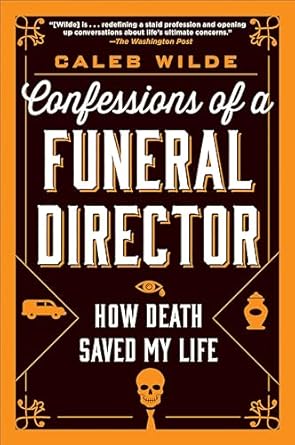
A: The only book I recommend to everyone across the board, no matter their reading preference, is Caleb Wilde’s Confessions of a Funeral Director. As you can probably guess, it’s an examination of death through the eyes of a 3rd generation funeral director. But Wilde is no ordinary mortician. He’s an incredible theologian and philosopher and he writes with such depth and transparency that provides unique insight into this dark, depressing thing that gets swept under the rug in our society.
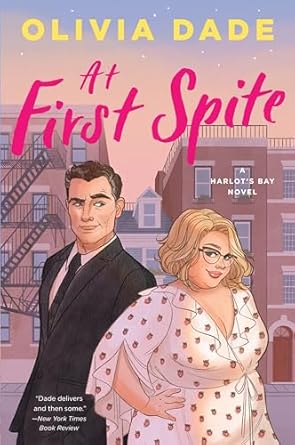
On a lighter note, the romance I’ve been shouting about from the rooftops this month is At First Spite, by Olivia Dade. I like my romances to relate something about the depth of human experience, and this is no exception, but there’s also enough fluff and banter to be a fun page-turner. The MMC, Dr. Matthew Vine the Third, is the most stand-up, compassionate hero I’ve ever read. He makes caregiving hot! And he gives the best grovel of any book.
Q: Can you tell me a little bit about your writing process? Note taking; favorite place to write uninterrupted; etc?
A: Sure. I’m inspired by careers, rather than tropes or even characters at first onset. I have to determine what career field is calling to me first, because that will determine everything else:
What kind of character does this job?
What would their day-to-day or socioeconomic status look like?
What type of education would they have received?
How would all these things make them the person they are right now, at the start of the story?
What lie does my protagonist believe about herself, as a result of her education/background/career, that she’ll have to overcome by the end of this journey?
Then, I think, Can I subvert the expectations somehow? Should I?
I take a long time researching the things a character in their particular career field would know. I take notes for months. From those notes comes the character and story.
I’m currently researching for a book (romance) about an artist, so I’m learning about color theory and the veining of marble and Michaelangelo’s chisel techniques. She’s a stonecutter, and strong because of that, so when it’s a spicy scene, I know I’m going to have to mention the play of the muscles in her shoulders and back. It’s a dead (and expensive) art she’s trying to revive, so that tells me she’s probably myopically focused on her work, at the expense of her love life and everything else, so what happens when she meets the MMC and suddenly realizes something’s missing in her life? I wouldn’t know her without knowing her career and how she obtained that career.
Eventually, at one point in my research phase, a first sentence will pop into my head. That’s when I start writing. I write from start to finish, about 4-5 days a week. I don’t plot or outline, but that’s not entirely accurate, either. I’m an intuitive writer, with an innate sense of storytelling and conflict, so I tend to know where my story’s going, even if I tell myself I don’t.
For instance, when I was researching mortuary work, I learned funeral directing has one of the highest degrees of attrition and burnout of any career field. When I wrote Undertaking Love, even though it’s an enemies-to-lovers story, which tends to be motivated by external conflict, I knew my story arc ultimately had to center the MMC’s burnout, healing, and all the messy aftermath. Since his traumas informed his whole character, it was easy for me to realize from the beginning how poorly he probably communicated with his funeral home rival, causing a problematic workplace “enemies” situation.
As far as logistics, I have an office where I write that looks like the Slytherin common room. I need copious amounts of coffee, and complete silence. A lot of my “writing” time is spent away from the computer, thinking, and it’s invaluable.
Editing is my favorite part of the process. When I write, I sometimes circle around what I was trying to say, without realizing it. In editing, I can finally spend the time getting to the bottom of what my characters are going through.
Q: Tell us a little about what inspired your latest release.
A: For the past few years, I’ve been writing a romance series about the people who work in deathcare (morticians, and forensic pathologists, and autopsy techs, etc.). I wanted to explore more than just the gruesomeness of their jobs, but the long hours, the drudgery, the emotional hardships of working both with the dead and the living. And grieving people often aren’t their best selves.
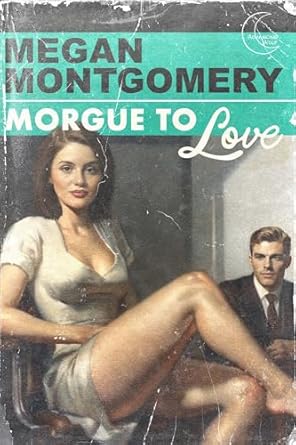
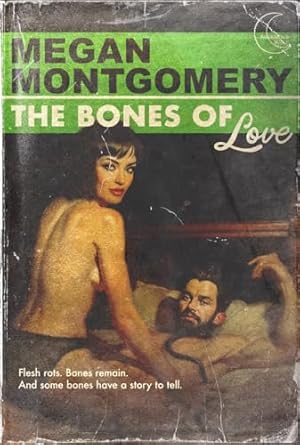
The Bones of Love is about Dr. Decca Crowley, a forensic anthropologist and death doula, who uses her career and hobbies to take care of everyone except herself. Her friend, Gus, has just graduated from Greek Orthodox seminary, and he must marry before his ordination to the priesthood or else remain a monk. By now, he’s put off becoming a priest long enough, and he’s ready to submit to his fate. But Decca intervenes at the last minute with a proposal of marriage. They’ll just live in pleasant companionship, she thinks. She doesn’t know that the reason he didn’t date in seminary was because he was secretly in love with her. She thinks she’s the only one harboring more-than-platonic feelings. It’s a slow burn, but I was taught how to write sex from the erotic romances of Tiffany Reisz and Charlotte Stein, so when it burns, it burns!
There’s a family saga element to the series and Bones is the culmination that I never consciously set out to write. We see all the characters come together in unique ways. It’s a crying book. It’ll tear you apart and put you back together again. And if you’re the type who can’t not cry when you see strong men cry, ALL the strong men in this book cry at one point. I can’t give details without spoiling it. It’s very healing though.
Q: Which one of your books was your most favorite to write?
A: Undertaking Love was difficult, but it’s still my favorite. I love starchy, emotionally-constipated heroes, and that’s George. And Bethany is such a dirty old man in a bombshell body, but also the kind and caring mom who brings homemade cookies (okay, they’re store bought) for the photographer and all the assistants at her OnlyFans shoot. She’s such a cool person.
Q: What advice would you give to a writer working on their first book?
A: Find your process. Do whatever it takes to get words on the page, whether it’s extensive outlining, or just spewing out words that don’t quite fit together. No matter how crazy you think it is, if it increases your word count, it’s working.
Don’t read too much advice at first, from readers or writers, or you might not ever find what works for you.
Read widely. Story is story, no matter what genre, and you never know what will leave a mark on you.
If you write romance, please ignore readers’ lists of “I hate when…” or especially, “ick” words. It’s author kryptonite. Write the hated trope. Do the thing that speaks to you. Do it like no one else has done it and make converts out of the naysayers. Also, no one’s going to DNF a scene or book because of one word. If you’re writing the scene well enough, they’ll barely notice the word. Also, sometimes the scene is better if the reader is a little uncomfortable. If you write for readers, they’ll know. And they won’t like it enough for you to build a career on.
Follow Megan

Megan Montgomery is a multi-award winning author of steamy, smart, character-driven romance.
Her debut novel, WELL…THAT WAS AWKWARD, described as “a big, juicy bite of Chesapeake Bay culture,” was inspired by her homesickness for southern Maryland. She now lives among the cornfields of Illinois with her family–but don’t ever mistake her for a Midwesterner. A goth at heart since age 12, she loves the color black, Mozart’s Requiem, and the history of death and burial rites.
When she’s not writing, reading, or cooking dinners her son won’t eat, you’ll find her volunteering at the library or the medicinal herb garden, or cackling over a cauldron during a full moon.
Her books have received the B.R.A.G. Medallion, Best Indie Book Award for romance, the Indie Reader Discovery Award for chick lit, the Rudy Award for contemporary romance, and were finalists in the Page Turner Book and Screenplay Awards, but she’s most thrilled when she makes personal connections with readers.
Looking for book recs…


 Adventures in Literature
Leave a comment